The dishes the channel publishes for weight loss, and the four changes that do most of the work — none of which is giving up rice.
5 dishes·8 posts
These entries were published with “weight loss” in their own title, so the collection is the channel's labelling rather than ours. It includes the occasional video that is advice instead of a recipe, and those are worth watching for the same reason the dishes are worth cooking.
Underneath the recipes sits one argument: weight comes down when you consistently eat slightly less energy than you use. Which change you make first is what decides whether you can hold it — oil, then protein, then drinks and snacks, and only then the grain portion, as a portion rather than a ban.
5 dishes
Every dish published with this label
Newest first. The play button starts the video here; the dish's name opens its own page, where the description published with it is.
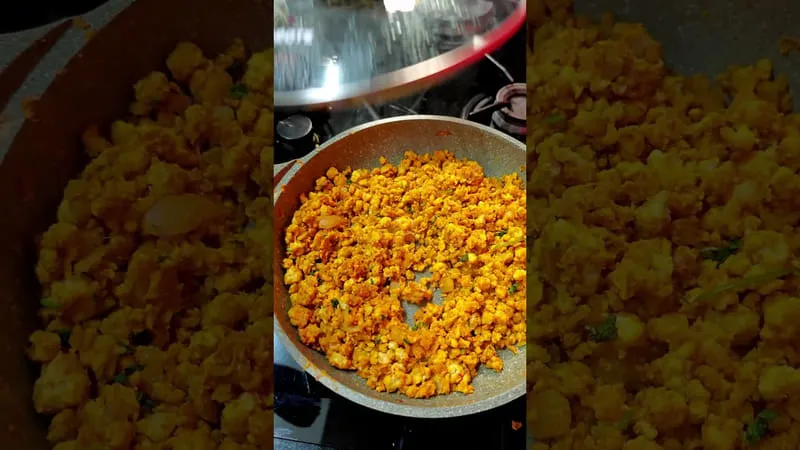
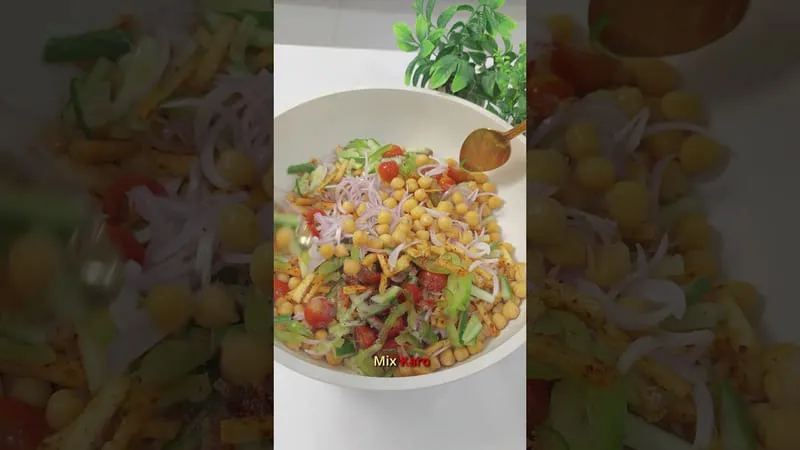
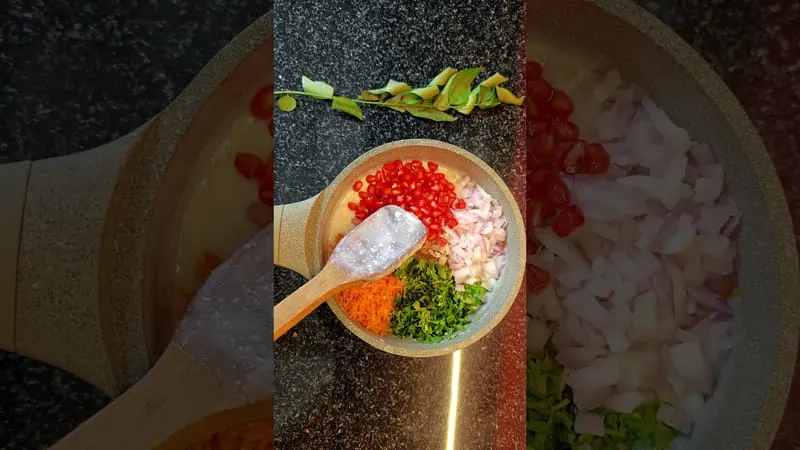
Looking for a high protein, healthy, and quick recipe? Try these Smashed Chicken Tacos – crispy outside, juicy inside, and packed with flavor! 🌮🔥 Perfect for: • Weight loss diet…
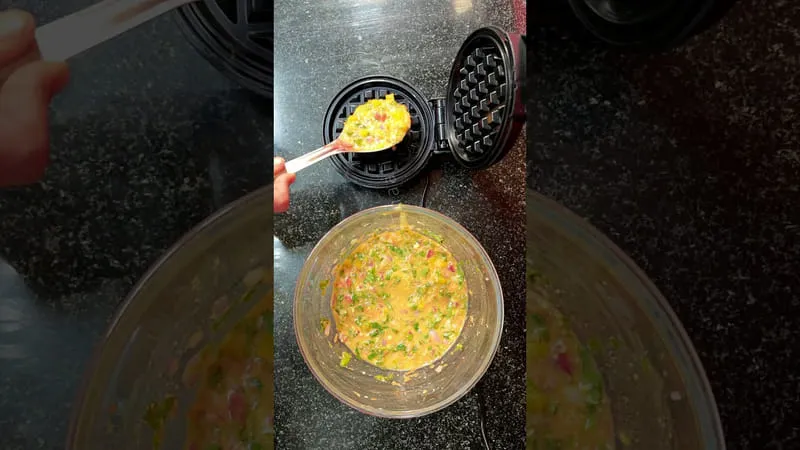
Looking for a healthy, zero oil, high protein breakfast? 🧇💪 Try this super easy Egg Waffle recipe made without oil! Perfect for weight loss, muscle gain, and clean eating…
Indian mackerel wrapped in a banana leaf and cooked with a fraction of the oil a fry usually takes — what one portion carries, the plate it lands on, and what we are not claiming.
Two filmed breakfasts and the arithmetic they share: what makes a first meal last until one o'clock, where the oil at breakfast quietly goes, and what a light breakfast costs.
Fruit is the one sweet food nobody has to be argued into. What a fruit bowl carries, where its sugar is and is not the problem, and what it takes for it to hold you like a meal.
A practical way to work out your own protein target — and what that looks like on a normal plate of dal, curd, roti and rice, with the honest ranges rather than a single number.
Two ways this usually fails, the change that does most of the work, why rice is not the villain, and what a week of steady progress actually looks like.
A packet of biscuits comes with a label. A katori of your mother's dal does not. How to get close enough on real Indian home cooking, without weighing anything.
Restaurant food is not the problem — the gravy, the portion and the frequency are. What to order when someone else is cooking, what to skip, and how to log a meal you did not cook.
Habits
Weight loss
Meal planning
Read the post
The numbers
Change these three before you cut rice
1
The oil. It is the largest source of calories in Indian home cooking that adds no volume, no protein and no fibre. An ordinary day carries around 300 calories of it without anyone frying anything on purpose, and halving that is roughly 150 calories a day.
2
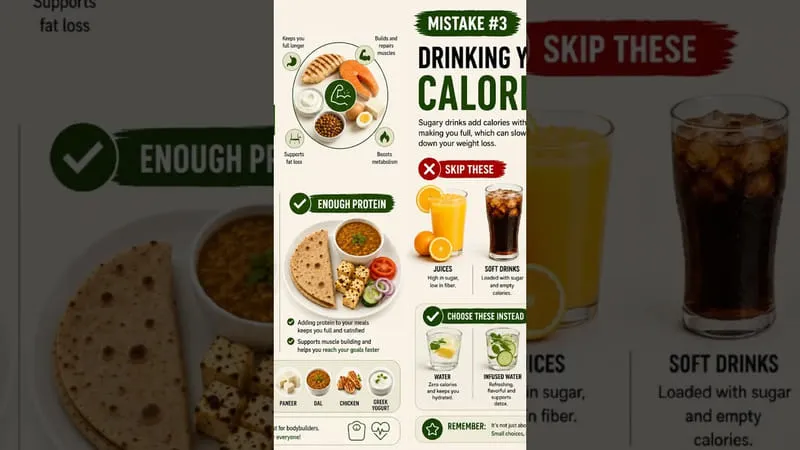
The protein. Most Indian plates land around 20 g a meal. Pushing it to 30 to 40 g is what keeps an afternoon from being settled by chai and biscuits, and dal, curd, paneer, eggs, soya, fish or chicken all get you there.
3
Drinks and snacks. Not because they are uniquely fattening, but because they are the easiest place to spend 300 calories and forget them: sweet tea through the day, a packaged juice, biscuits with the evening cup.
4
Rice last, and as a portion. A katori is about 130 calories, with almost no fat in it, and it pairs with dal in a way that genuinely improves the protein picture. Two fists to one, decided at the serving spoon, is the swap that holds.
5
Expect the month, not the day. Rates commonly given as safe and sustainable for most adults sit around a quarter to half a kilogram a week, and salt, sleep and hormones move the scale by a kilogram either way.
What this page is not: a plan, a promise of a rate of loss, or medical advice. If you have diabetes, thyroid issues, PCOS, are pregnant, or take medication, this is a conversation with your doctor before it is a conversation with a recipe page.
Questions
Asked about this way of cooking
Do I have to give up rice to lose weight?
No. Rice is about 130 calories a katori, has almost no fat, and is the thing that makes a meal feel like a meal in most Indian homes. What usually happens when people cut it is that the calories come back somewhere else — more of the fry, a bigger snack at six, or a “healthy” replacement that costs more than the rice did.
How fast should weight come off?
The rates commonly given as safe and sustainable for most adults sit around a quarter to half a kilogram a week. Faster is usually water, and usually followed by the rebound that makes people stop. Weigh yourself in the same conditions once or twice a week and read the month, not the day.
Is this a diet plan I can follow?
It is a recipe collection plus the reasoning behind the order of changes — not a plan, and not medical advice. The app is where a plan gets personalised: it puts meals on your week and counts them against your own targets, while the cooking stays in your kitchen.
What should I change first?
The oil, because it is the largest source of calories that adds nothing else to the plate, and because changing it does not make the food feel like a diet. Then protein, then the drinks and snacks, and only then the grain portion.
HealThaali offers general nutrition information and meal guidance. It is not a medical device and does not diagnose, treat or cure any condition. Always follow the advice of your own doctor or dietitian.
Keep cooking
The other ways to cook this way
Each page is collected the same way: a rule over the titles the channel published, applied to every dish in the library.
The recipes are free to watch. The app is where a plate gets counted against your own targets, and where the plan adjusts if a week goes sideways.
HealThaali is in active development. Links go live the moment the app is published — until then these buttons are switched off on purpose rather than pointing at a placeholder.